Anxious But Trying, Part II: Medication Isn’t a Magic Wand (and Neither Is a Boyfriend)
come sit with us
join the it girl wellness social club
A space to drop the act, share the load, and find your people.
Join the club
If you read part one, you met sixteen-year-old me. Pacing, then lying down, then pacing again. Bricks on the chest. Spiraling over every glance in the hallway.
What I didn’t tell you is that I kept almost all of it to myself. For a very, very long time.
The first time I couldn’t carry it alone
Something happened in high school that I’m going to keep for me. (That’s allowed, by the way. You can share your story and still keep a few rooms locked. Boundaries are a wellness practice too, you know.) What I will tell you is that the bucket was filled enough that I couldn’t hold it by myself anymore, and I had to spill it all to my parents.
They did what they knew to do: they got me into therapy. Then I got on medication. And I thought, great, done, fixed. The medication will take it from here.
Spoiler: it doesn’t. (I know, I know, this was shocking to me, too!) Medication can be a huge part of the picture, and it still is for me. But it was never going to do the work for me. It gave me a floor to stand on. I still had to learn how to walk. And walking took a really long time to learn. Every time I thought I got the hang of it, I fell. And sometimes, there I was, getting back up because I knew I had to try again… and well, the other times? Picture a toddler learning to walk and crying on the floor because they fell and it scared them. Also me.
Pills don’t teach skills.
The second time was louder
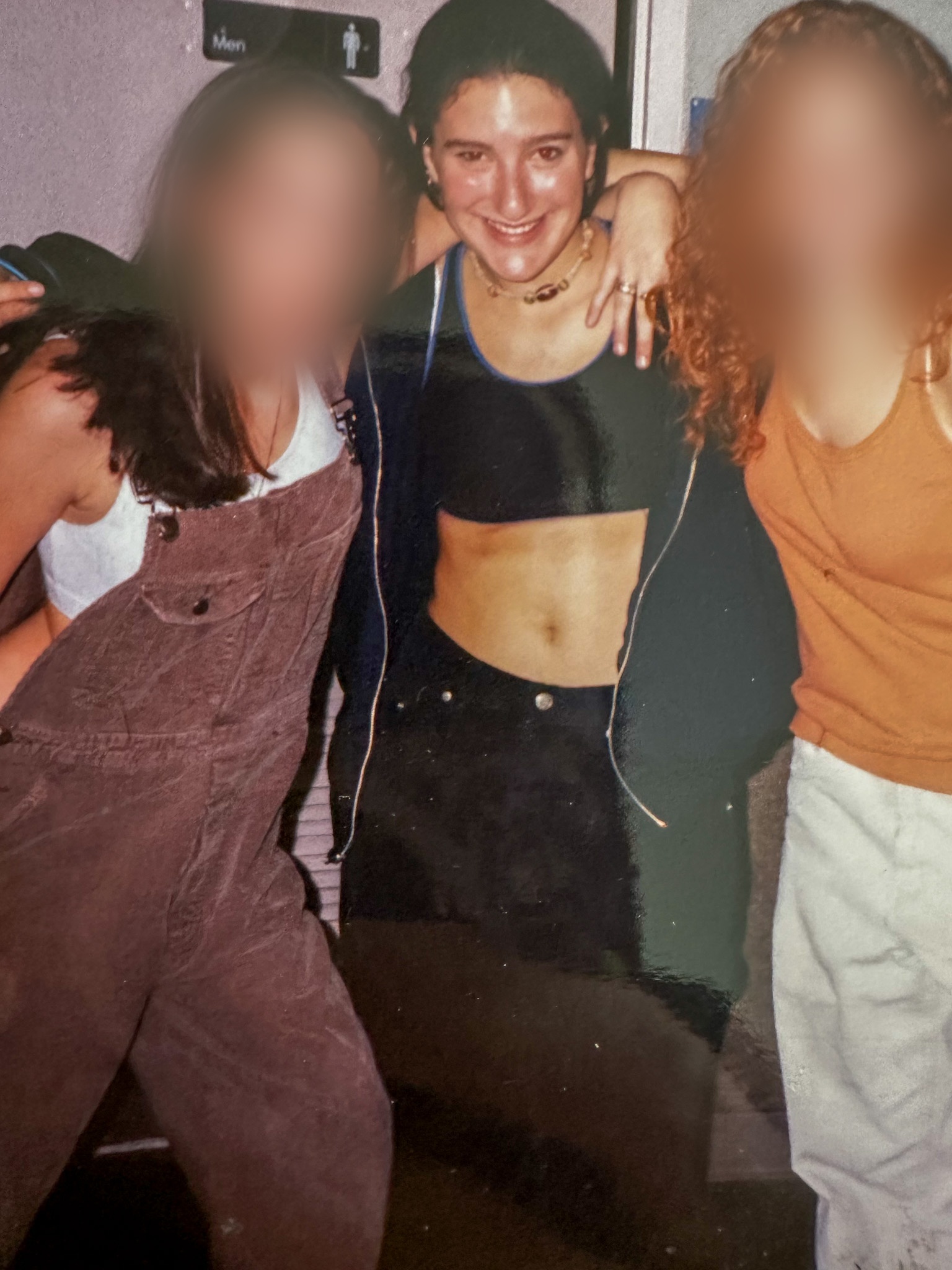
Then came college. And college me? She was spiraling. Hard. I numbed out the way a good college student does, with alcohol and, if I’m being fully honest, some illegal substances too. (Sorry, Mom and Dad 🥺.) Hot tip: Don’t try this at home.
It worked, kind of, the way turning up the radio works when your car starts making a weird noise. The noise is still there. You just can’t hear it for a while. But if the radio is loud enough, why take care of the noise the car is making?
That is… until it peaked. That night ended with me in the ER getting my stomach pumped, and then a stay in the hospital. And an outpatient program I was forced to go to.
I’m not sharing that all for shock value. I’m sharing it because it’s where something finally clicked, and it’s the thing I most want you to hear: nothing changes until the behavior changes. Not the diagnosis. Not the prescription. Not the promise to yourself that tomorrow will be different. The behavior.
And then there were the boyfriends
Let’s talk about the other thing I reached for. I truly believed that if I found the right person, I wouldn’t feel so alone, because that’s what we all want, right? Companionship, someone to turn to, someone that always has your back… you know, someone to lean on. I yearned for the anxiety and deep, utter sadness to finally quiet down, and I swore up and down this would help.
Hey, reader! Guess what, it did not. AT ALL.
Some boyfriends were supportive, and I’m grateful for them (they know who they are). Some poured gasoline on the whole thing and watched that mofo burn (they also probably know who they are). And some were just there for a good time (sigh, yes, they know who they are, also). But even the good ones couldn’t do what I was asking them to do, because it was never theirs to do. Another person can sit next to you in it. They can’t do your work for you.
What I actually needed was to work on me. Again… damn it all… damn it all to hell!
And here’s the part that stopped me mid-sentence while writing this. What I really wish I’d had back then was a place where I could talk honestly about this stuff. It wasn’t really a thing, but I know in retrospect, it would have helped. I needed a place where nobody flinches when you say “therapy” or “medication” or “I had a really bad night.” Where you don’t have to have it all together to be taken seriously.
Wait. What. That’s… literally what I’m building right now. (Hi, It Girl Wellness. Hi, Social Club. Did not have that one on my 2001 bingo card.)
So what did I actually learn?
- Asking for help is the start of the work, not the end of it.
- Medication can hold the floor. It can’t walk for you.
- Numbing isn’t healing. It’s a snooze button.
- Nobody else can be the fix. Not a partner, not a friend, not a parent. They can love you through it, but hear me loudly: they cannot do it for you.
- Nothing shifts until the behavior shifts.
Up next
The big valleys are the easy ones to point to. They’re like a crazy good telenovela episode where a beautiful woman walks in on her partner getting it on with someone else. So, yeah, they’re dramatic. They have a clear before and after. But most of living with anxiety and depression isn’t the ER. It’s a random Tuesday when you don’t want to do a single thing you need to do, and you do it anyway, because the kids need lunch and the emails won’t answer themselves. It’s catching yourself overthinking, knowing exactly which tool from therapy you should be using, and letting yourself spiral a little longer anyway.
That’s part three: the everyday. And, finally, what “not letting it run the show” actually looks like for me now.
Until then, come tell me: what was the thing you reached for that you thought would fix it? A person, a habit, a new city, a new haircut. No judgment here. That’s what the Social Club is for.
If you’re struggling right now, you don’t have to wait for a valley to reach out. In the US, you can call or text 988 (Suicide & Crisis Lifeline) anytime, or call the SAMHSA National Helpline at 1-800-662-4357 for substance use support. Outside the US, findahelpline.com lists local options.